
Michigan Criminal History Checks
No one Michigan search contains every criminal record. ICHAT is the public name-based view of reportable Michigan criminal history held by the Michigan Department of State Police. MiCOURT and independent county portals show filed cases. County sheriffs maintain recent booking and jail data. OTIS covers Michigan Department of Corrections custody and supervision, while PSOR publishes the public part of the sex offender registry.
Start with the event and document needed. A statewide rap sheet and a court file answer different questions. A recent jail booking may appear before a court complaint or an ICHAT cycle. A fingerprint review is the strongest way to identify your own Michigan record because it avoids same-name uncertainty.
- Use ICHAT for a joined public Michigan criminal history. Enter accurate identity details and save the paid report while it is available.
- Search MiCOURT or the county court platform for the complaint, hearings, disposition, and judgment tied to a specific case.
- Use the county sheriff or jail for current booking and custody facts. The statewide OTIS search does not replace a county roster.
- Check OTIS for MDOC prison, parole, or adult felony probation status and PSOR for a current public registry profile.
- For your own identity-confirmed file, follow Michigan State Police's RI-008 fingerprint review process and ask the Michigan source agency to correct any wrong segment.
Michigan ICHAT Search Fields
The Internet Criminal History Access Tool accepts a Michigan SID number or a group of identity fields. The name path requires first and last name, date of birth, race, and gender. Middle name, suffix, aliases, and a requester reference can help separate similar identities. Michigan State Police warns not to put a Social Security number in the miscellaneous-number field.
| Field | Use | Important Detail |
|---|---|---|
| SID | Direct identifier | Can replace demographic fields when known |
| Name and DOB | Main public search | Exact spelling and birth date affect the match |
| Race and gender | Required descriptors | Used to narrow the name-based result |
| Additional names | Alias search | Add former, maiden, or arrest names when relevant |
| Miscellaneous number | Requester reference | Up to 13 characters; never use an SSN |
ICHAT costs $10 per search under MCL 28.273 through October 1, 2027. It can return public Michigan felony arrests and convictions, serious-misdemeanor information, and pending reportable cases. It excludes warrants, traffic matters, juvenile files, federal and tribal records, events from other states, suppressed or set-aside entries, and local misdemeanors outside the reporting rules.
Note: A no-record ICHAT result means only that the submitted descriptors found no matching public repository entry.
The Criminal History Repository in Michigan
The Michigan Department of State Police Criminal Justice Information Center, known as CJIC, keeps the statewide repository. Michigan law directs police, prosecutors, and courts to submit defined parts of reportable criminal events. CJIC joins the fingerprint-linked arrest segment, charge action, and court disposition under a State Identification number.
The public sees only a portion through ICHAT. Restricted LEIN and national CJIS data are not public alternatives. MICR holds Michigan crime statistics rather than personal rap sheets. The detailed Michigan State Police criminal history checks page separates each Michigan State Police product, its coverage, fee, and correction route.
- SID
- The Michigan identification number used to connect fingerprint-supported criminal events to one identity.
- TCN
- The transaction control number created when fingerprints enter the reporting stream.
- CTN
- A criminal tracking number that helps link prosecutor and court action to the correct arrest cycle.
- Rap sheet
- A compiled criminal history, not the full document file from one court or police agency.
Michigan Records Reach CJIC
A Michigan arrest can create four records on different clocks. The Michigan police agency writes the incident and arrest report. A Michigan county jail makes the booking entry. A Michigan district court opens a case after an authorized complaint is filed. Michigan State Police CJIC receives fingerprints and later the prosecutor and court results for a reportable event.
Reporting flow: Arrest › Booking › Fingerprints › Prosecutor Action › Court Disposition › CJIC Rap Sheet
MCL 28.243 generally requires biometric data to reach Michigan State Police within 72 hours after felony arrests, misdemeanors punishable by more than 92 days, and other listed Michigan offenses. Yet the final result can lag. A missing or transposed CTN, TCN, or agency incident number may leave a Michigan court outcome unmatched. A local 92-day misdemeanor may never enter the fingerprint repository.
If the public report is wrong, contact the Michigan office responsible for that segment. Police correct arrest facts. The prosecutor corrects charging action. The court corrects the judgment or sentence, sometimes through an RI-027 worksheet. Michigan State Police verifies changes with the original reporter.
Record Systems Across Michigan
Michigan's statewide systems divide the work by record type. Each gives a focused view and carries a clear boundary. None replaces the county file that first recorded an arrest, prosecution, or jail booking.
| System | What It Holds | Run By |
|---|---|---|
| ICHAT | Public reportable Michigan criminal history | Michigan State Police CJIC |
| MiCOURT Case Search | Case indexes and registers for participating courts | Michigan Judiciary |
| OTIS | MDOC prisoners, parolees, probationers, and recent discharges | Michigan Department of Corrections |
| Michigan PSOR | Public sex offender registry profiles, maps, and alerts | Michigan State Police |
| MI-VINE | Custody, release, and qualifying court notifications | Michigan justice data partners |
The CJIC Dashboard Portal adds statewide statistics, not a person search. Its Crime in Michigan data can change as agencies update current-year submissions.
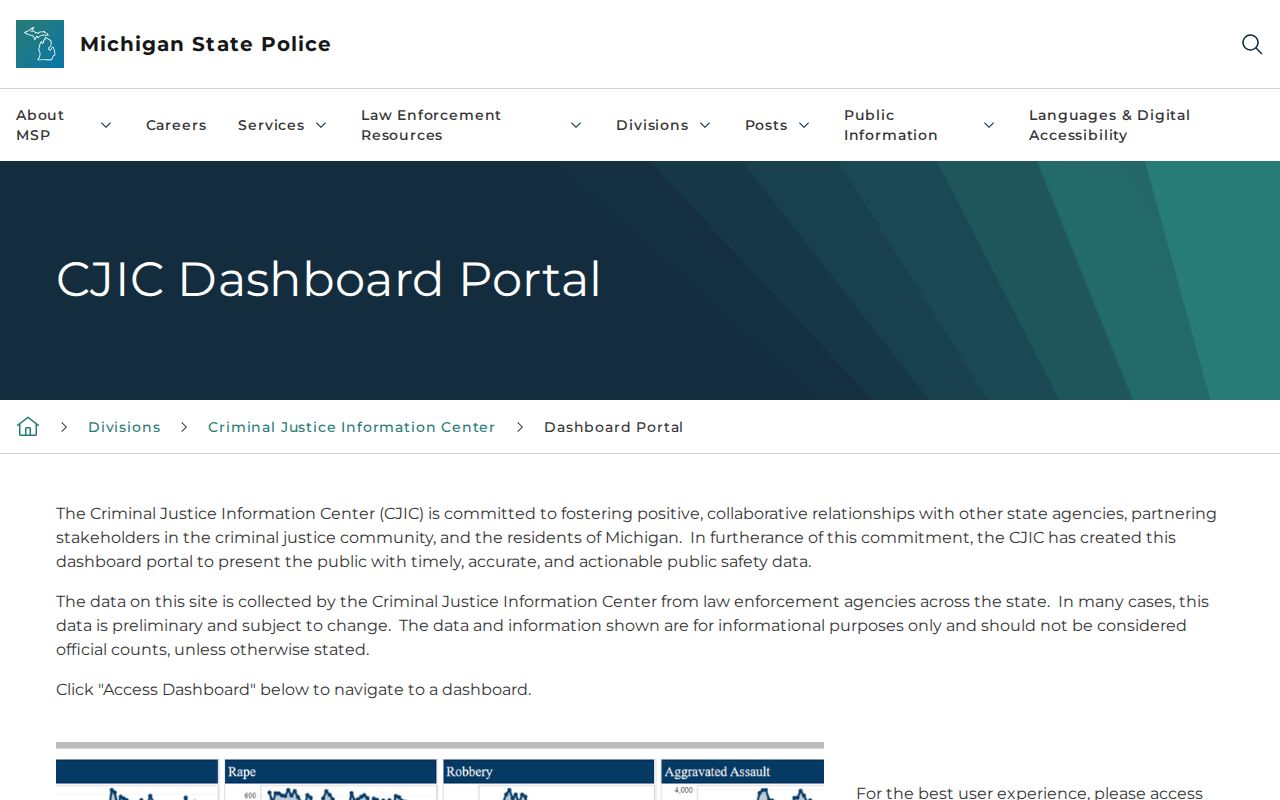
The dashboard belongs in trend research, while ICHAT and court files remain the person-level channels.
Michigan Custody Has Three Layers
A county jail, an MDOC prison, and a federal prison are separate systems. Michigan county jails hold people awaiting trial, awaiting transfer, or serving local terms. The Michigan Department of Corrections reports 26 operational prisons and supervises adult felony probation and parole. Federal custody uses the Bureau of Prisons locator.
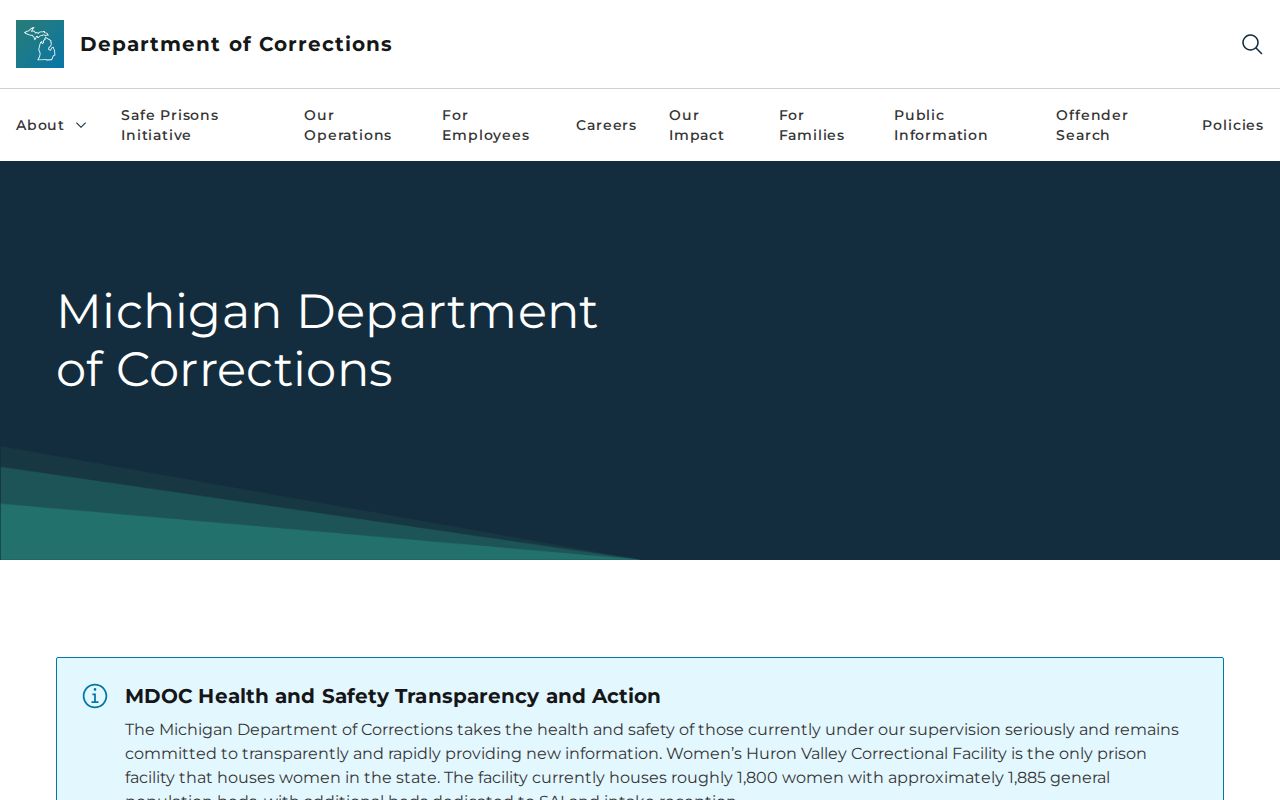
MDOC's main resources lead to prisons, field operations, parole, and records channels, but they do not expose county booking rosters.
The Correctional Facilities Administration overview places the state prison count in context. Its February 2026 population report counted 32,350 people in CFA custody, while community supervision totaled 40,615.
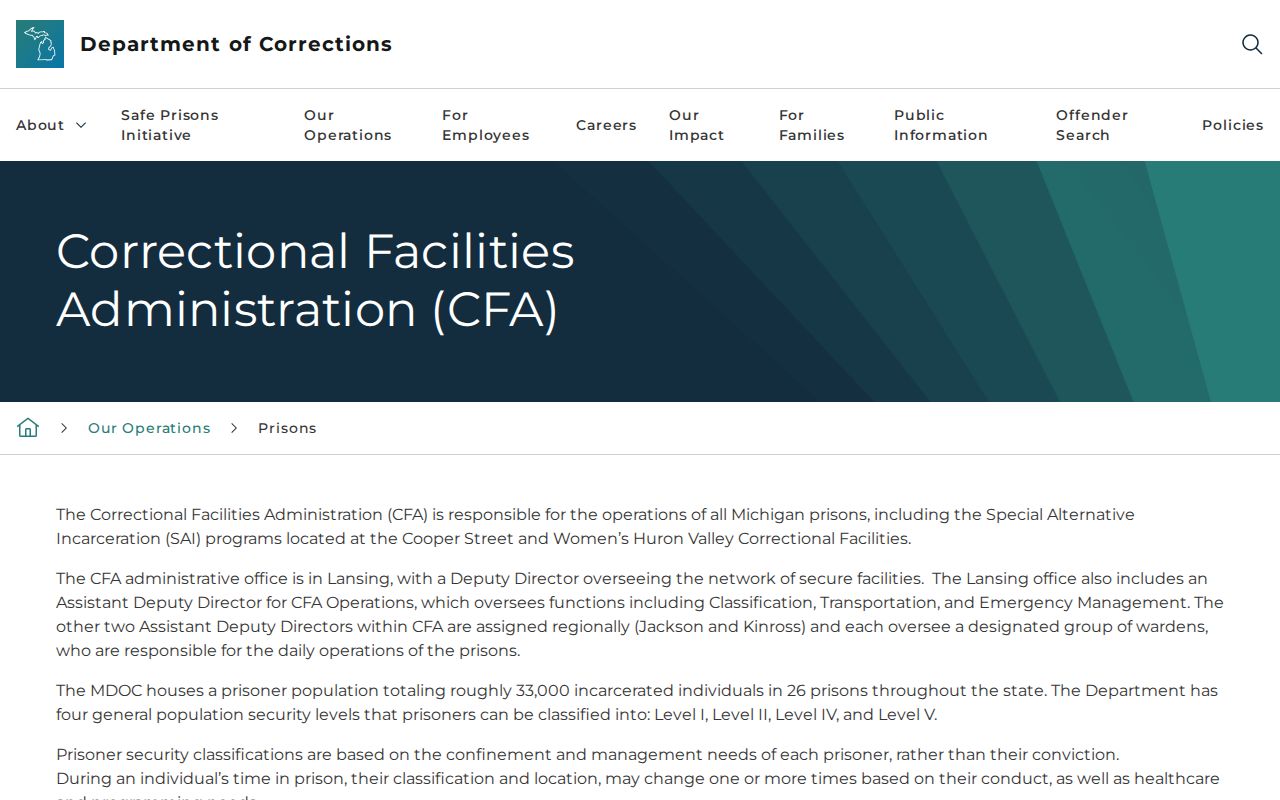
Those dated totals describe the system's scale. They should not be treated as a live inmate count.
For a person-level search, open the Offender Tracking Information System. OTIS accepts a name, MDOC number, sex, race, age, status, or marks and tattoos. It covers current prisoners, parolees, probationers, and people discharged within three years.
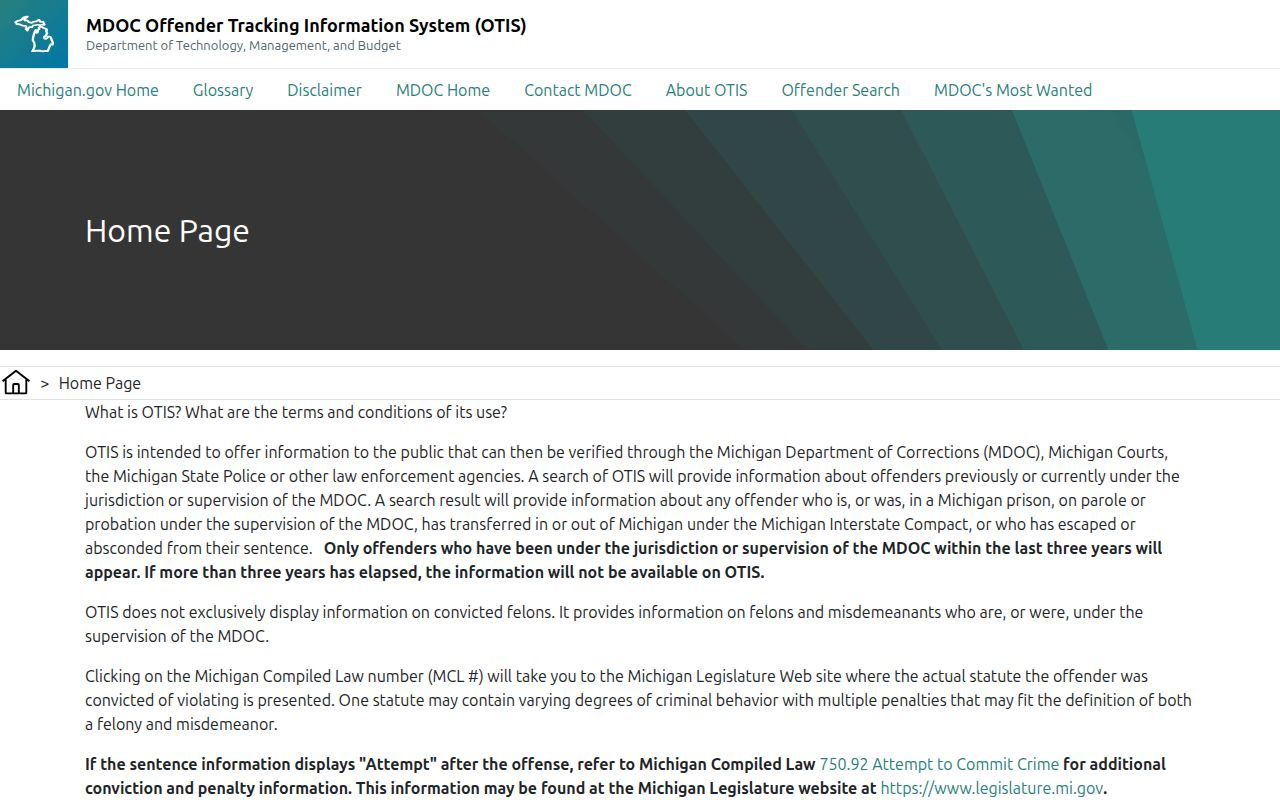
An OTIS earliest-release date is not a promised release date. Confirm the sentence in the circuit court judgment and current custody through MDOC.
Michigan Criminal Record Types
The phrase criminal record can point to very different documents in Michigan. The creator controls the content, access rule, and correction path. Treat an entry as evidence of what that system recorded, not as a substitute for every related file.
- Arrest and booking records: police document the event, while the county jail records intake, custody, charges, and bond.
- Court case files: district and circuit clerks keep complaints, registers, orders, judgments, and public copies.
- Repository history: CJIC compiles reportable fingerprint-linked arrest, charge, and disposition segments.
- Warrant records: issuing courts and restricted law-enforcement systems control them; Michigan has no public statewide warrant portal.
- Custody and supervision: counties keep jail data, while MDOC keeps state prison, parole, and adult felony probation records.
- Registry records: local agencies register and verify data that Michigan State Police maintains in MSOR and publishes in part through PSOR.
Note: An arrest states that custody or enforcement action occurred; only the court record establishes the final case outcome.
Michigan Warrants and Police Reports
Michigan has no public statewide warrant lookup. LEIN and NCIC are restricted. A public check starts with the district or circuit court docket and the issuing county sheriff. A bench-warrant entry can appear in a register of actions, but ICHAT and OTIS exclusions mean an empty search there says nothing about current warrant status.
Police reports follow a different Michigan route. Send a Michigan Freedom of Information Act request to the agency that created the report. Michigan State Police offers a portal plus email, fax, and mail paths for its own reports. Local sheriffs and police answer their own requests. Michigan courts fall under MCR 8.119, not Michigan FOIA.
The Traffic Crash Purchasing System moved behind MiLogin on April 14, 2026. It sells eligible statewide UD-10 reports for $15, usually after the responding agency submits them.
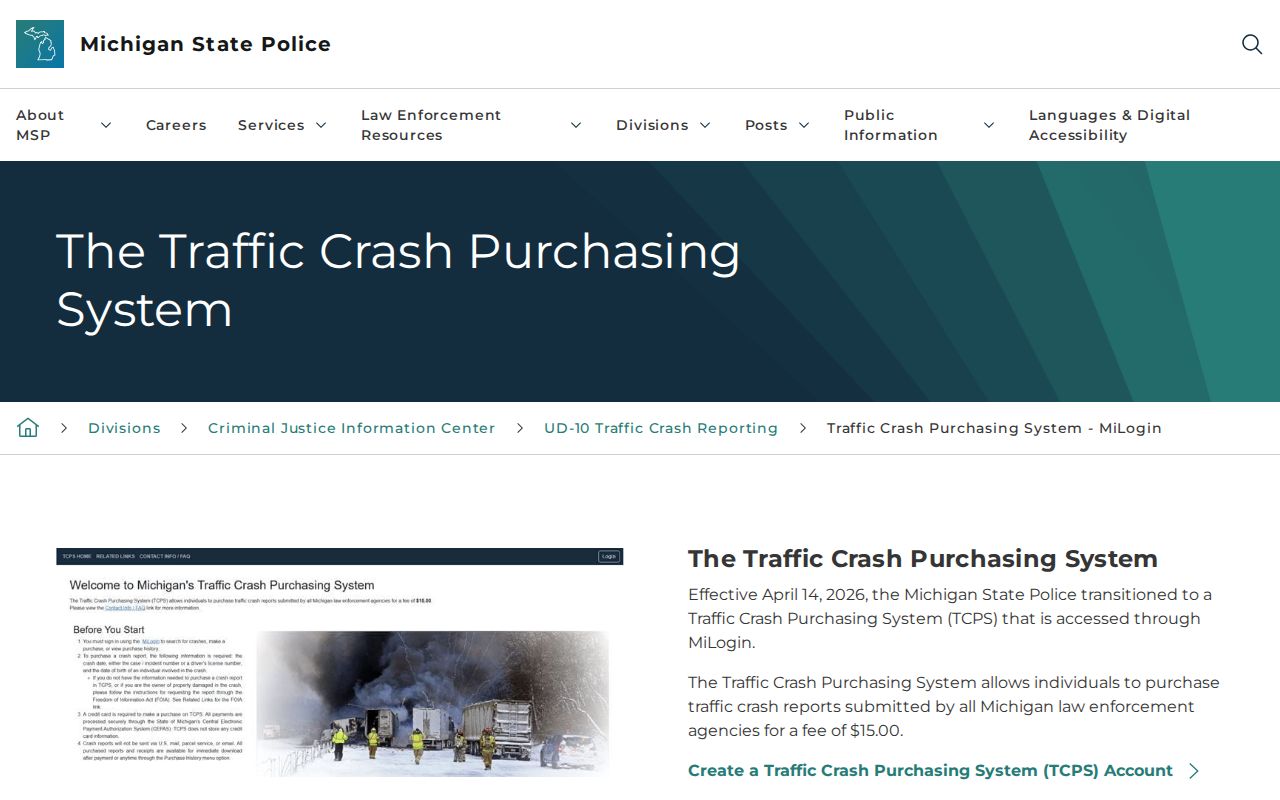
A crash report, arrest report, and court case may grow from one event, but each has its own custodian and access test.
Michigan Clean Slate Set Asides
Michigan uses the term set aside for relief commonly called expungement. Application relief begins in the Michigan court of conviction. Separate courts require separate applications. The MC 227 packet includes the application, a certified conviction record, fingerprints, and Michigan State Police's $50 processing fee. Michigan State Police advises allowing about eight weeks for its portion, while the full Michigan court process can take longer.
Automatic Clean Slate began April 11, 2023. Eligible misdemeanors punishable by no more than 92 days can clear after seven years without a numerical cap. Up to four eligible 93-day-or-more misdemeanors can clear after seven years. Up to two eligible felonies can clear after ten years from sentence or completion of MDOC imprisonment, whichever is later. Offense and later-case exclusions apply.
The Michigan Clean Slate information page explains the automatic process and current limits.
A Michigan set-aside removes a qualifying conviction from ordinary public access, but Michigan State Police retains a restricted nonpublic record. If an eligible entry still appears, check ICHAT, the convicting court, and Michigan State Police's automatic-set-aside contact channel.
Michigan Record Access Laws
Michigan access rules depend on the record keeper. FOIA governs public records held by executive and local public bodies, subject to exemptions. It does not govern court files. MCR 8.119 supplies the court-access framework. Act 289 governs the statewide criminal history reporting and dissemination system.
Key Michigan authorities:
Michigan FOIA, MCL 15.231 to 15.246 permits requests to state and local public bodies while preserving statutory exemptions.
Act 289 of 1925 defines Michigan criminal history collection, reporting, and dissemination duties.
Michigan Court Rule 8.119 allows inspection and copying of public case records unless law, rule, or order restricts access.
MCL 780.621 and 780.623 govern Michigan application set asides and the restricted record Michigan State Police retains.
Sex Offenders Registration Act creates registration duties and the public registry framework.
Active investigations, protected personal data, juvenile and victim information, sealed material, and records made nonpublic by statute may be withheld or redacted. Public access never turns an accusation into proof of guilt.
Michigan Criminal Record Fees
State prices differ by product. County courts and local agencies may add copy, certification, fingerprint, media-review, or mailing charges. Check the exact office before ordering.
| Michigan Channel | Current Cost | Result |
|---|---|---|
| ICHAT | $10 | Immediate public Michigan criminal history search |
| Fingerprint self-review | $30 plus local capture | Certified or notarized subject record in about 3 to 5 weeks |
| Adult set-aside processing | $50 plus local costs | Michigan State Police processing and routing to the convicting court |
| TCPS crash report | $15 | Eligible statewide UD-10 report |
| MiCOURT, OTIS, PSOR | Free | Public index or profile; official court copies may cost more |
| Michigan State Police FOIA | Variable | Nonexempt Michigan State Police records; online payment adds $2 |
Michigan residents seeking their own fingerprint record obtain an RI-008 card from a local law-enforcement fingerprint site, then mail it with the fee and contact details to Michigan CJIC. Michigan has no sole statewide fingerprint contractor. Michigan State Police lists approved Live Scan agencies, and each site sets its service fee.
Michigan Sentences and Supervision
Michigan does not label every felony through a simple public A, B, or C ladder. The offense statute sets the maximum. Sentencing-guideline classes serve a different purpose. A high court misdemeanor can use felony-like circuit procedure because its possible term exceeds one year, even though the name says misdemeanor.
District courts generally try misdemeanors with maximum terms up to one year and handle the first steps in felony cases. After bindover, circuit court holds the felony file. Since July 2, 2024, the district or municipal felony record becomes nonpublic on bindover under MCR 8.119(H)(10), so a case that seems to vanish should be searched in circuit court.
Michigan courts impose probation. MDOC Field Operations Administration supervises most adult felony probationers and parolees. The Michigan Parole Board decides release for eligible indeterminate prison terms. An OTIS eligibility date is not a release promise, and district court remains the key source for misdemeanor probation records.
Note: Read the statute, court level, and final judgment together before assigning a Michigan offense label or sentence.
Michigan Criminal Records by County
Arrests, bookings, police reports, and trial-court files begin locally. Michigan's 83 county routes lead to the sheriff, jail, prosecutor, and district or circuit court that created the record. The seven featured counties below cover the state's largest metro record systems.
The State of Michigan county directory confirms the statewide roster.
Each local link opens the matching county criminal-record site, where office contacts and county-specific access details belong.
Wayne County
Detroit · Michigan's largest county justice-record network
Oakland County
Pontiac · Court Explorer and major metro agencies
Macomb County
Mount Clemens · Large circuit, district, and sheriff systems
Kent County
Grand Rapids · Western Michigan's largest county record route
Genesee County
Flint · Distinct court, jail, and city-police layers
Washtenaw County
Ann Arbor · Circuit, district, campus, and local-police records
Ottawa County
West Olive · Major lakeshore court and sheriff route
Browse the full directory of all 83 Michigan counties to reach any county's criminal records site.
Michigan Records Across Time
Michigan's repository authority dates to Act 289 of 1925 and the early fingerprint era. MICR crime reporting began in 1959, became mandatory in 1968, and moved to incident-based collection in 1982. ICHAT was operating by 2005. Automatic Clean Slate production started in 2023, followed by a new Crime in Michigan Dashboard in December 2024.
Electronic coverage has no honest single start year. Legacy conversion, reporting mandates, fingerprint links, and contributor practices vary. Older court files may remain onsite, offsite, on microfilm, or under a retention schedule. Begin with the clerk that created the record.
The Archives of Michigan county guides identify historical local holdings.
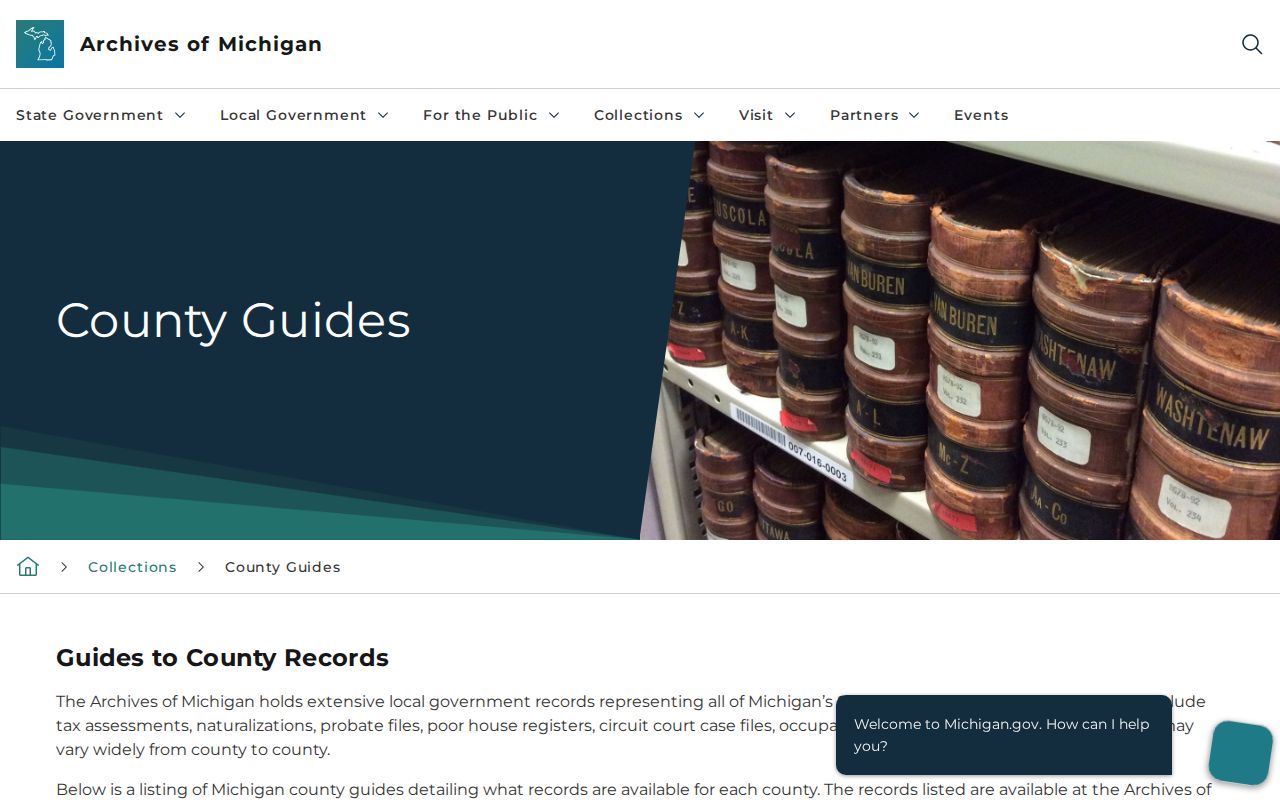
The archive route supports genealogy and older-case research, but the current court remains the source for a live case and certified judgment.