
Arrest Records Across Michigan
Michigan county sheriffs, Michigan city and township police, campus or special police, tribal agencies, and Michigan State Police can make arrests within their authority. The Michigan arresting office writes the incident or arrest report. A Michigan county jail creates booking and custody data when a person is admitted. If a complaint is approved, the Michigan district court opens a case. Those records share an event but do not share one custodian.
Michigan State Police CJIC receives required biometric arrest submissions and later charge and judicial updates. Its public Internet Criminal History Access Tool, or ICHAT, shows the public part of reportable Michigan criminal history. ICHAT is not the Michigan police narrative, jail roster, complete court file, warrant index, or list of all local misdemeanors. A recent Michigan booking may appear at the county before fingerprints, charges, and the disposition form one statewide arrest cycle.
Who Holds Michigan Arrest Reports
Michigan custody records follow the creator. A Michigan sheriff keeps its own incident records and county booking data. A municipal department keeps reports written by its officers. Michigan State Police holds reports created by troopers and MSP units. Campus, tribal, special, and federal offices keep their own material under the law that applies to them. The jail can confirm custody, but the arresting agency is the source for the narrative report.
Michigan has no statewide pool of all local police reports. Ask the creating agency under the Michigan Freedom of Information Act. Use the MSP Records Request Portal only for records MSP owns. That official page also gives email, fax, and mail routes, while a county or city request goes to the local public body.
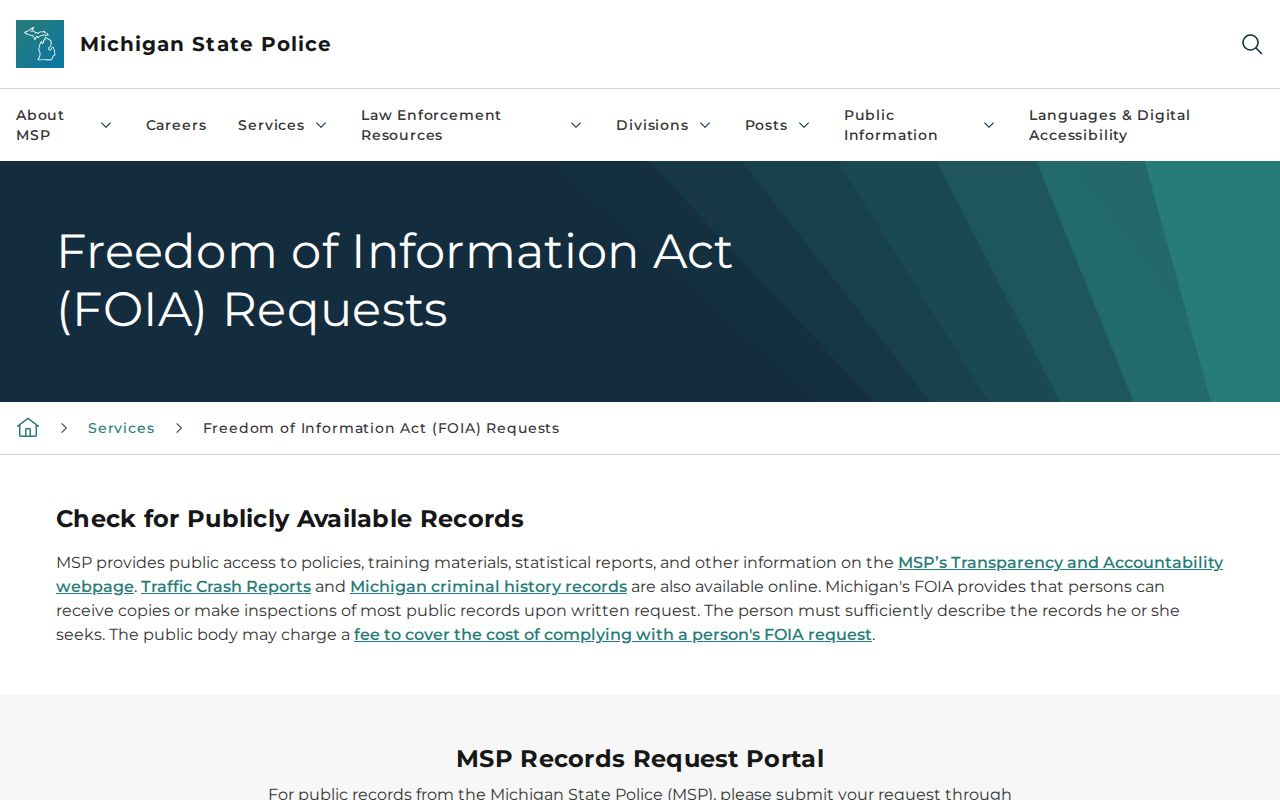
The Michigan portal separates a statewide police-record request from the county routes needed for sheriff and city arrest reports.
Note: A Michigan jail roster and police incident report describe different parts of the same arrest event.
From Michigan Arrest to Rap Sheet
Michigan law requires biometric data to reach MSP within 72 hours after reportable arrests, including felonies, misdemeanors punishable by more than 92 days, and other listed offenses. The arresting agency records fingerprints and descriptors. Live Scan can create a Transaction Control Number, while the prosecutor may assign a Criminal Tracking Number. These identifiers help CJIC connect the arrest, charging action, and court result to one State Identification record.
Data flow: Arrest › Booking › Fingerprint Submission › CJIC Repository Entry
The Michigan prosecutor adds charge action, and the Michigan court reports the final disposition and sentence. That later data closes the cycle. A rejected print transaction, wrong identifier, delayed disposition, nonreportable offense, or event outside public coverage can leave a gap. The reporting duty applies across all 83 counties, but it is not a promise that every Michigan arrest segment is current at the same moment.
Michigan Arrest Data Versus MICR
The Michigan Incident Crime Reporting program collects crime data, not personal rap sheets. MICR grew from voluntary UCR reporting in 1959, mandatory reporting under a 1968 law, and incident-based collection that began in 1982. Its tables and dashboard help readers measure reported events across Michigan. They are not a way to find one person's booking or prove the outcome of a charge.
The official MICR program publishes methods, manuals, and current data channels.
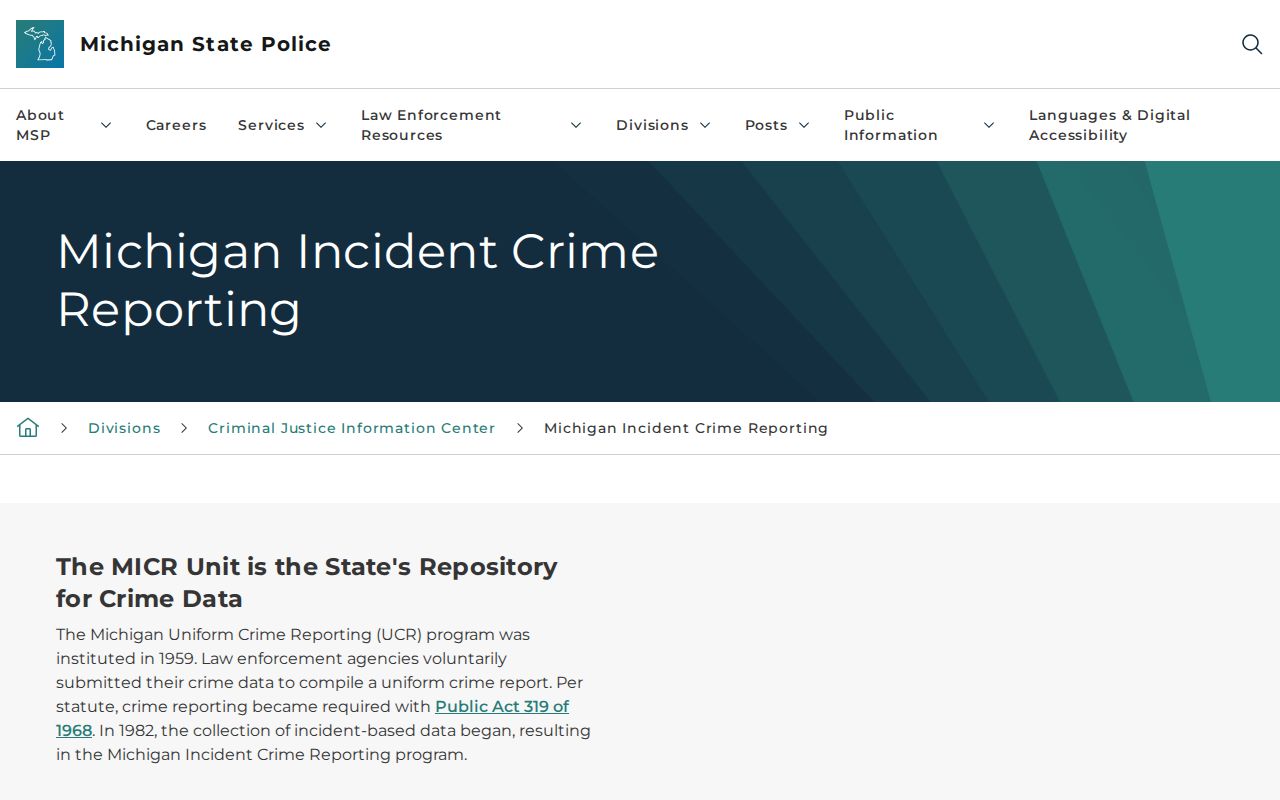
The Michigan program's reporting definitions explain why an incident count should never be relabeled as a count of unique arrestees.
For one dated measure, MSP reported 3,175 statewide methamphetamine arrests in calendar 2025, down 8.9 percent from 3,487 in 2024. The data were extracted February 5, 2026 and remained subject to updates. A trend number adds context, but an individual Michigan arrest search must still use the jail, court, agency report, and ICHAT as relevant.
Michigan Arrest Lookup Options
Use a four-channel Michigan check. The county roster answers whether a person was recently booked or remains in local custody. The Michigan district or circuit docket shows complaint, bond, hearings, and disposition. The arresting agency can release a report under FOIA after lawful redactions. ICHAT can show reportable public Michigan arrest and conviction information across counties, while OTIS is useful only after MDOC custody or felony supervision begins.
- Identify the likely county and arresting agency. Check the sheriff's jail roster or current-custody contact first.
- Search the district court for a complaint or arraignment, then circuit court if a felony has been bound over.
- Open the directory of all 83 Michigan counties for the correct jail, records office, and court route.
- Request the incident report from the office that made the arrest, and use ICHAT for the public statewide repository view.
- Compare every arrest entry with the court disposition before drawing a conclusion about the result.
Michigan timing explains many conflicts. A jail can publish a booking before the 72-hour biometric deadline. A Michigan court file starts only when a complaint is authorized and filed. ICHAT can show “No Data Received” for a missing segment, while MiCOURT may miss a nonparticipating court, an old filtered case, a spelling variation, or a lower-court file made nonpublic at bindover.
Note: A recent Michigan booking may appear before either the court case or public ICHAT arrest cycle.
Requesting a Michigan Arrest Report
A focused Michigan FOIA request should name the incident, date, location, agency, and people involved as precisely as possible. MSP's Michigan portal uses a free MiLogin account and asks for contact details, record type, a narrative, delivery choices, and attachments when needed. A written request can also be sent to MSP by email, fax, or mail. Local police and sheriff reports must be requested from the Michigan office that created them.
The MSP requestor user guide walks through the official online fields and payment or download controls.
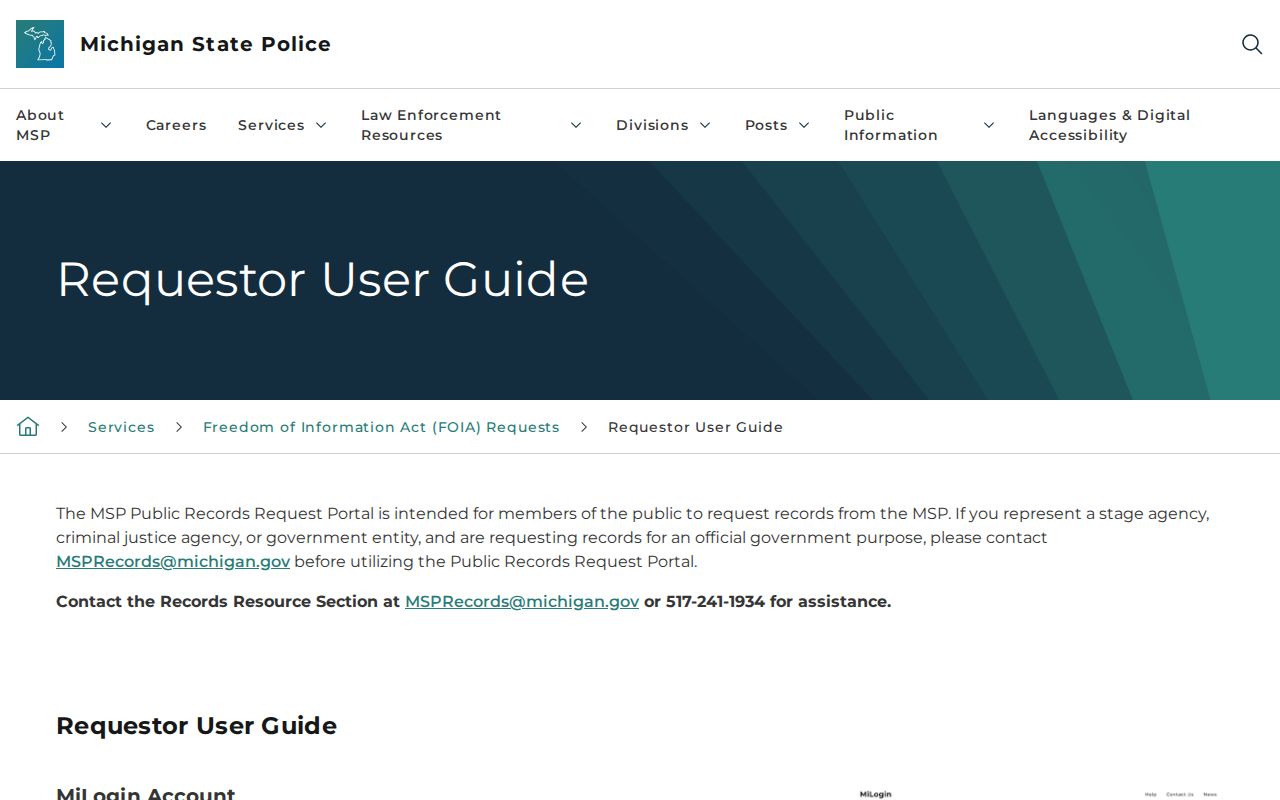
A precise request can cut search and redaction time while helping the agency locate the correct Michigan arrest record.
Michigan FOIA generally calls for a response within five business days, with one written extension of up to ten business days. Fees may cover search, review, redaction, copies, and mailing. Letter or legal paper is capped at ten cents per page, a qualifying indigency waiver can cover the first $20, and online payment adds $2. Active-investigation, privacy, fair-trial, source, tactic, juvenile, and victim material may be withheld or redacted.
Fields on a Michigan Arrest Record
A Michigan booking entry records intake and custody. A Michigan police report can add the alleged facts, officer observations, and investigative material that may be releasable. An ICHAT cycle adds the fingerprint-linked arrest, prosecutor, and judicial segments that meet public dissemination rules. None of these sources alone proves guilt. Charges at booking can be amended, rejected, dismissed, or resolved under another count.
| Arrestee Name & Identifiers | Name and aliases in the Michigan source, age or date of birth, descriptors, and local or state identifiers, with protected data withheld. |
|---|---|
| Arrest Date & Location | The time and place of a Michigan custody event or incident, depending on the source record. |
| Arresting Agency | The Michigan sheriff, police department, MSP unit, or other agency that created the arrest segment. |
| Charges at Booking | Initial alleged Michigan offenses and statute references, which may differ from prosecutor or court charges. |
| Booking Number & Photo | The Michigan jail intake key and a booking photograph when the county lawfully publishes one. |
| Bond / Release Status | Michigan bond, hold, transfer, release, or next-court information at the time the roster updated. |
Michigan mugshots are not republished here. A booking photo is an identification and custody record, not a verdict. Older Michigan booking material may require a local records request and can be limited by retention, privacy, investigative, or other rules.
Michigan Arrest Media Records
Video and crash records can be connected to an arrest yet remain separate record types. Michigan's Law Enforcement Body-Worn Camera Privacy Act adds location, privacy, and retention rules for body-camera footage. Broad video requests can require substantial review and redaction. Narrow the event, time, camera, and location. Send the request to the agency that has the recording.
The official Michigan body-worn camera law supplies the special access framework.
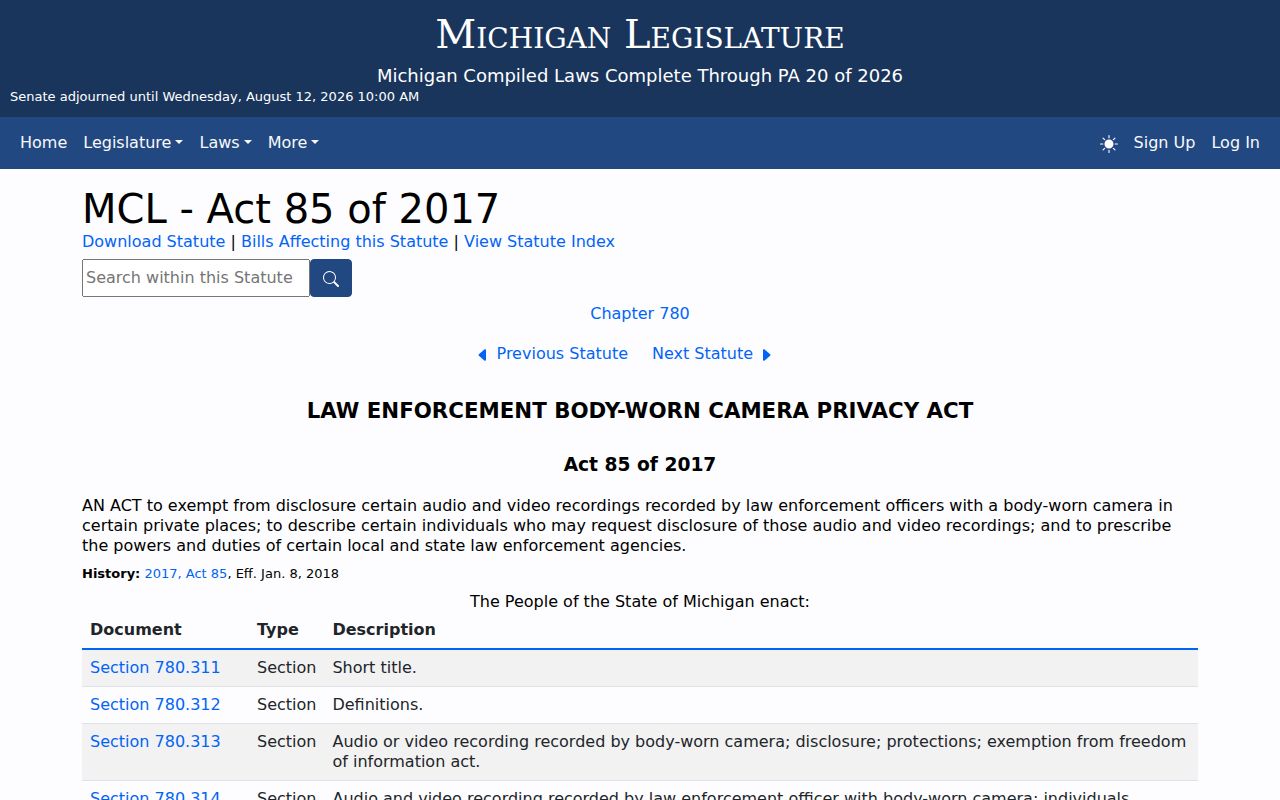
The Michigan law helps explain why a written arrest report may be available when some video or private-location footage is not.
A traffic crash report also differs from an arrest record. The statewide Traffic Crash Purchasing System sells submitted UD-10 reports, now through MiLogin, for $15. Typical availability is three to 30 days, and reports remain purchasable for up to ten years. An involved-driver identifier or report number, date of birth, and crash date may be needed. An arrest tied to a crash must still be checked through the jail, court, and arresting agency.
The MSP crash report access FAQ states the limits and current ordering details.
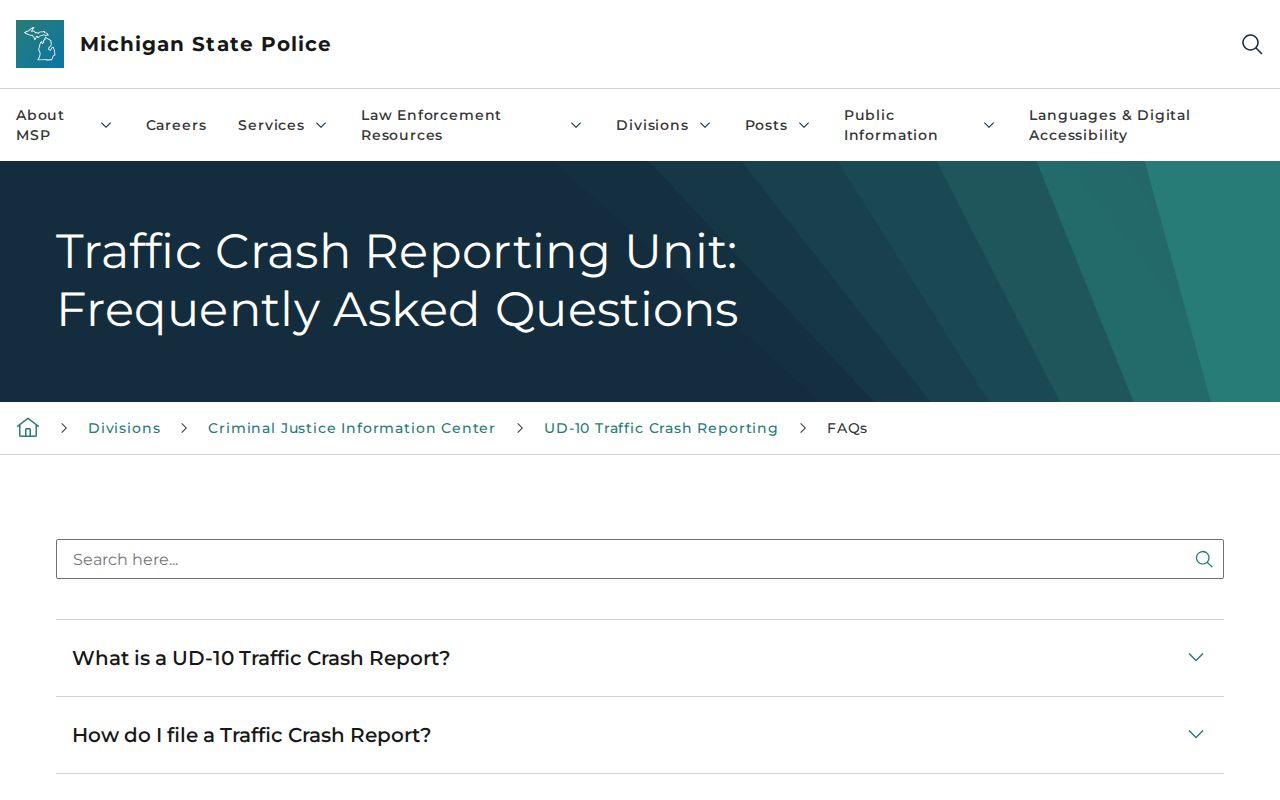
That separate system prevents a crash narrative from being mistaken for the criminal court disposition.
Note: Request Michigan video and incident records from the agency that created or retains the original material.
Michigan Arrest and Custody Split
A recent Michigan arrest belongs at the county jail, not OTIS. Michigan has 83 local jail systems and no single public roster for all of them. County pages vary from full booking profiles to basic current-custody lists or telephone confirmation. Use the booking number when dealing with the jail. For the narrative, use the arresting agency. For bond and prosecution, use the court.
OTIS covers current MDOC prisoners, parolees, probationers, and people discharged within three years. It does not list all county jail stays, older discharged records, other-state crimes, or a complete Michigan criminal history. MI-VINE can add custody and court-event notifications, but it depends on source updates and is not a historical rap sheet. Federal custody belongs in the federal BOP locator.
The MICR annual report collection preserves official statewide crime data as the program moved toward dashboards.
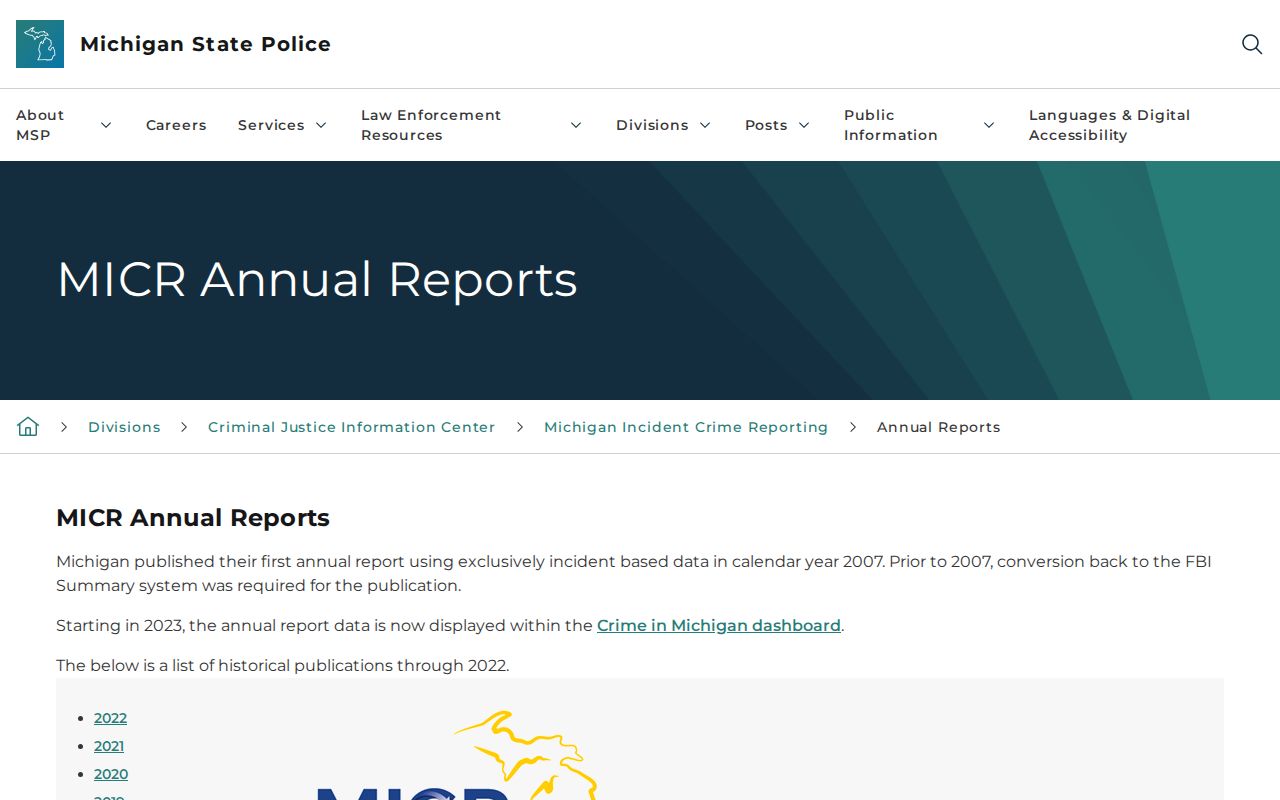
Those Michigan aggregate reports remain useful for trends, while an individual's status must come from the proper custody and court systems.
Michigan Arrests and Convictions Compared
An arrest is an accusation and custody event. A conviction is a court judgment based on an accepted plea or a verdict. Michigan public systems treat the two differently. A police file can remain after a case ends, subject to FOIA exemptions and retention. A qualifying dismissed arrest may be removed from public ICHAT and may qualify for biometric destruction under MCL 28.243, though exceptions apply. An eligible conviction can be set aside through Michigan's court-based or automatic Clean Slate process.
| Arrest Record | Conviction Record | |
|---|---|---|
| Created by | Michigan arresting agency and booking jail, with fingerprints sent to CJIC when required | Michigan court judgment reported to CJIC |
| What it proves | A person entered Michigan custody or was cited in an arrest cycle | Guilt was established by a Michigan plea or verdict |
| Public access | May appear in Michigan files, rosters, ICHAT, and a docket, subject to limits | May appear in the Michigan court file and ICHAT unless made nonpublic or set aside |
| Correction or relief | Correct the Michigan arrest segment at the arresting agency; dismissal and destruction rules may apply | Correct the Michigan judicial segment through the court; qualifying set-aside paths may apply |
If a dismissed Michigan arrest remains in public ICHAT, first verify the court outcome. MCL 28.243(8) addresses removal of qualifying pretrial-dismissed charge information and separate biometric-destruction rules. MC 235 is the court motion and order route when required biometric and arrest material was not destroyed. It is not a broad substitute for a conviction set-aside application.
Use the Michigan court case lookup to find the result, then contact the contributing agency, prosecutor, or court if a segment is wrong.
Note: A Michigan arrest entry without a court disposition is never proof that the accused person was convicted.